
How Much Has the Electric Car Market Grown in India by 2026?
- Cars
- Published: 29 Oct, 2025
Book a Test Drive
Free doorstep test drive at your convenience
India’s electric vehicle (EV) story has accelerated rapidly over the past decade — but growth has been uneven across vehicle segments. By 2026, the country has moved from early adoption to a clearer inflection point driven by policy support, new model launches, and improving charging infrastructure.
Big-picture growth (units and scale)
India’s overall EV sales climbed from roughly 50,000 units in 2016 to more than 2 million units by FY 2024–25, showing a dramatic scale-up in adoption — largely driven by two- and three-wheelers as well as commercial vehicles. This rise reflects both consumer demand and stronger manufacturing and policy push.
Passenger electric cars specifically
While total EV volumes surged, electric passenger cars (battery-electric passenger vehicles) remained a smaller slice of the total EV pie. Through 2024 passenger EV sales were still modest — under ~100,000 units — even as the broader EV ecosystem ballooned. However, passenger EVs began to pick up faster in 2025–26 as more mainstream models arrived and manufacturers scaled production.
Market share and recent momentum (by 2026)
By the first half of FY26 (the April–September period spanning 2025), electric passenger vehicles accounted for roughly 5% of total passenger car sales, nearly doubling their share versus recent years — a clear signal that passenger EV adoption is moving beyond niche buyers into the mainstream. This jump was supported by launches from established OEMs, falling battery costs, and localized manufacturing.
Where the growth came from
- Two- and three-wheelers and light commercial vehicles: These segments drove the majority of unit growth in early years because of lower unit cost and strong use-cases (last-mile delivery, intra-city commuting).
- Passenger cars: Growth accelerated only after broader model availability, better range, and more competitive pricing from Tata, MG, Mahindra, Hyundai, and newer entrants. Policy nudges (subsidies, tax incentives, state incentives) also helped.
Economic scale & forecasts
Market-research firms show differing valuations, but several reports estimate India’s EV market to grow rapidly in monetary terms across 2025–2026 as manufacturing, battery supply chains, and charging networks expand. Projections vary by methodology, but consensus points to strong double-digit growth as the sector scales.
Why Choose Electric Cars in India?
- Lower running cost — Electricity per km typically costs less than petrol/diesel; maintenance costs are lower because EVs have fewer moving parts.
- Government support — Central and state incentives, reduced registration/tax in some states, and purchase subsidies for specific segments lower the effective price.
- Better for urban air quality — EVs produce zero tailpipe emissions, helping reduce city pollution and public-health costs.
- Improving range and models — Newer models offer competitive range and features that meet mainstream buyers’ needs.
- Resale and fleet advantages — For fleet and commercial operators, total cost of ownership and regulatory tailwinds make EVs increasingly attractive.
Conclusion
By 2026 India’s electric vehicle market has unmistakably grown — overall EV sales surged into the millions, and electric passenger cars have moved from a nascent position to a visible and expanding share of new-car sales (approaching ~5% for passenger cars in H1 FY26). Most of the unit growth historically came from two- and three-wheelers, but passenger EVs are now scaling quickly thanks to broader model availability, policy support, and improving infrastructure. The coming years will be critical: continued policy clarity, charging rollout, and local battery manufacturing will determine whether India meets its aspirational targets for 2030.
FAQ
Q: How many EVs were sold in India by 2025?
A: Industry trackers reported total EV sales exceeding 2 million units in FY 2024–25 (driven mainly by two- and three-wheelers).
Q: What percentage of passenger car sales were electric by 2026?
A: In the first half of FY26, electric passenger vehicles made up about 5% of total passenger car sales — a near doubling from earlier years.
Q: Are EVs cheaper to own in India?
A: Generally yes for total cost of ownership over several years: lower “fuel” (electricity) cost per km, lower maintenance, and incentives can make EVs cheaper over the lifecycle — though upfront price remains a key factor.
Q: What’s holding EV growth back?
A: Remaining barriers include EV price parity for many buyers, uneven charging infrastructure (especially fast chargers), battery supply-chain scale-up, and occasional policy uncertainty at state levels.
Book a Test Drive
Free doorstep test drive at your convenience
Popular Brands




















Latest Car News
Limited Edition Skoda Slavia Monte Carlo Adds New Colours for 200 Buyers Only
Suzuki Loses India Market Share as Buyers Demand More Features
Hybrid Car Sales Decline 8% in June 2026: Complete Analysis
How to Book Maruti Brezza Facelift: Complete Booking Guide
Alto K10 vs Tiago: Which Is Better?
Maruti Brezza Facelift 2026: What's New Compared to the Current Model?
Renault Duster Adventure Edition vs Standard Duster: What's Different?
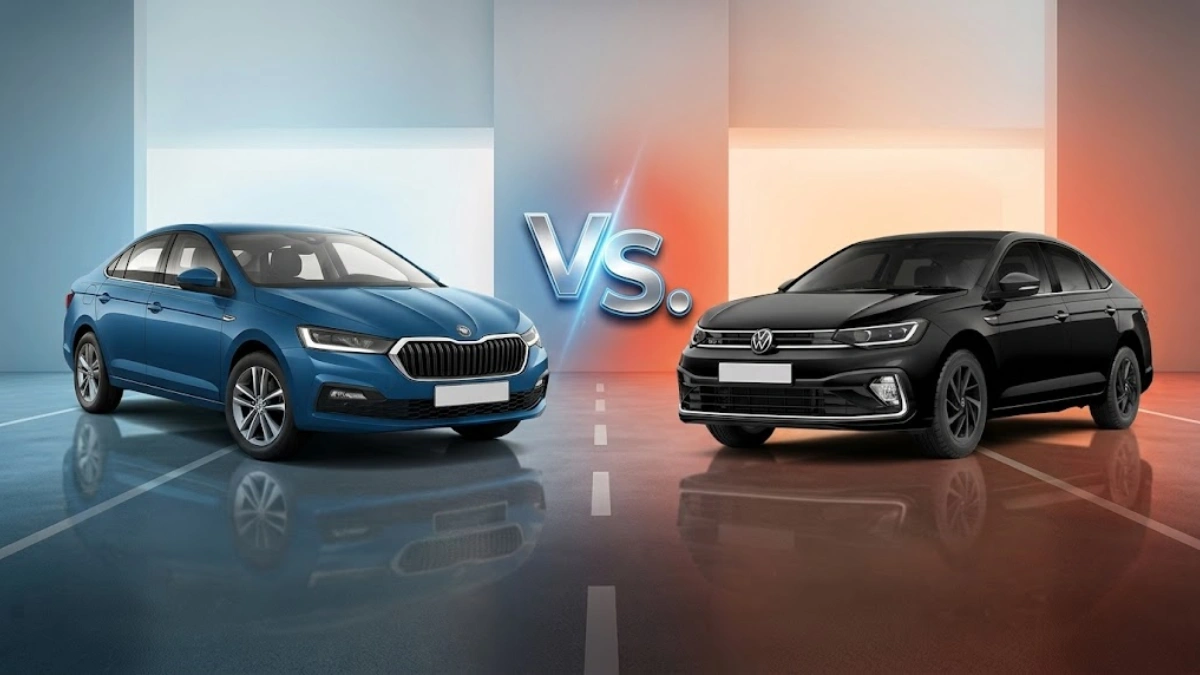
Skoda Slavia Facelift 2026 vs Volkswagen Virtus: Which Sedan Should You Wait For?
Volkswagen Tayron Life Launched in India at ₹41.99 Lakh
Volkswagen Announces 50% Reduction In Global Car Line-up
Tata Nexon Pure Plus : Know Everything Before Buying in July
Best Selling Cars of June 2026 in India
July 2026 Car Offers: Tata, Honda, Kia, MG, Hyundai, Maruti and Other Brands' Discount Offers
Renault Kwid 2026 Launched at Rs 4.53 Lakh
Cheapest Hybrid Cars in India: You Must Know
Tata Sierra Test Drive Booking in Noida: Complete Process Guide
Most Affordable Cars with Ventilated Seats in India
Upcoming Sedan Cars in August 2026 in India
Tata Harrier Test Drive Booking in Delhi: A Complete Guide
Upcoming SUVs in August 2026 in India